Top economist delivers blunt Fed rate warning for 2026
Wall Street was starting to price in a tougher Fed, but EY-Parthenon’s top economist Greg Daco feels investors may be looking for the wrong move. The shift began at the Fed’s June 17 meeting. According to Reuters, nine of 19 policymakers forecast at least one rate hike by year-end, ...
Overview
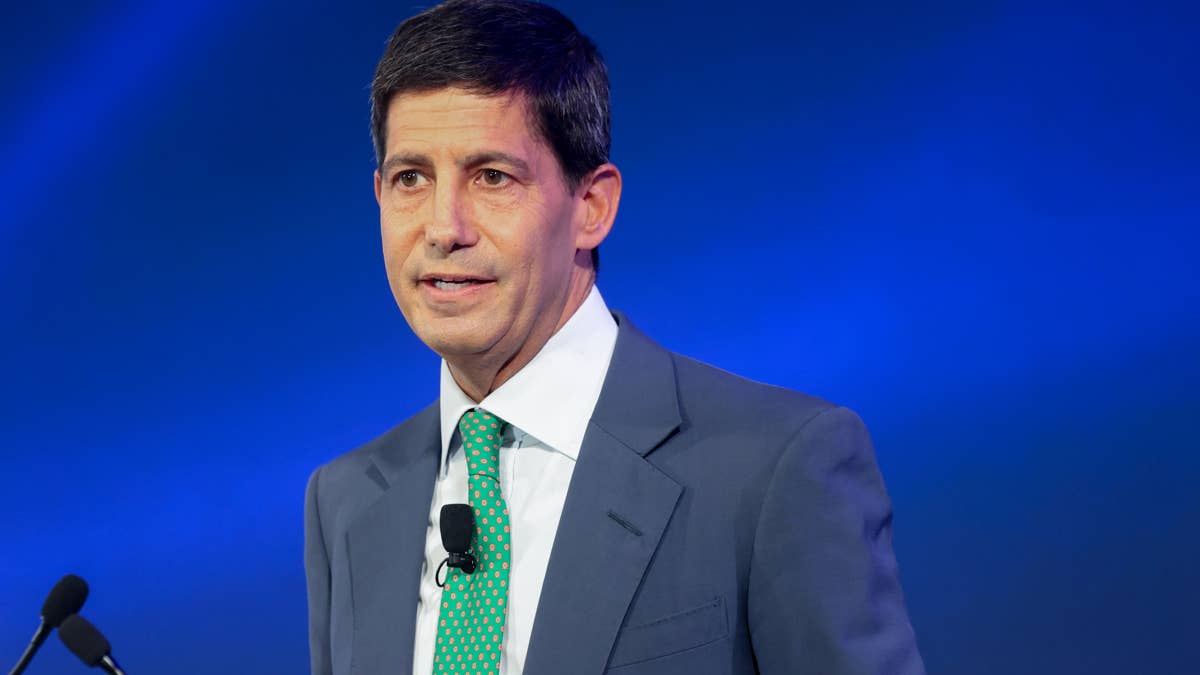
Wall Street was starting to price in a tougher Fed, but EY-Parthenon’s top economist Greg Daco feels investors may be looking for the wrong move.
The shift began at the Fed’s June 17 meeting.
According to Reuters, nine of 19 policymakers forecast at least one rate hike by year-end, while the central bank kept rates unchanged at 3.50%-3.75%. Though not a full consensus, it marked a hawkish turn from the prior meeting, when no policymaker had penciled in a hike.
Inflation gave the debate even more fuel. According to the Bureau of Economic Analysis, the May PCE report released June 25 showed headline inflation rising 4.1% from a year earlier and core PCE climbing 3.4%.
Naturally, Wall Street expected the rate-hike debate to get louder, but in a recent CNBC interview, Daco’s arguments cut the other way. He points to a supply-driven problem that higher rates might not be able to fix.
Chip Somodevilla/Getty Images
What Daco says the Fed will do next on interest rates
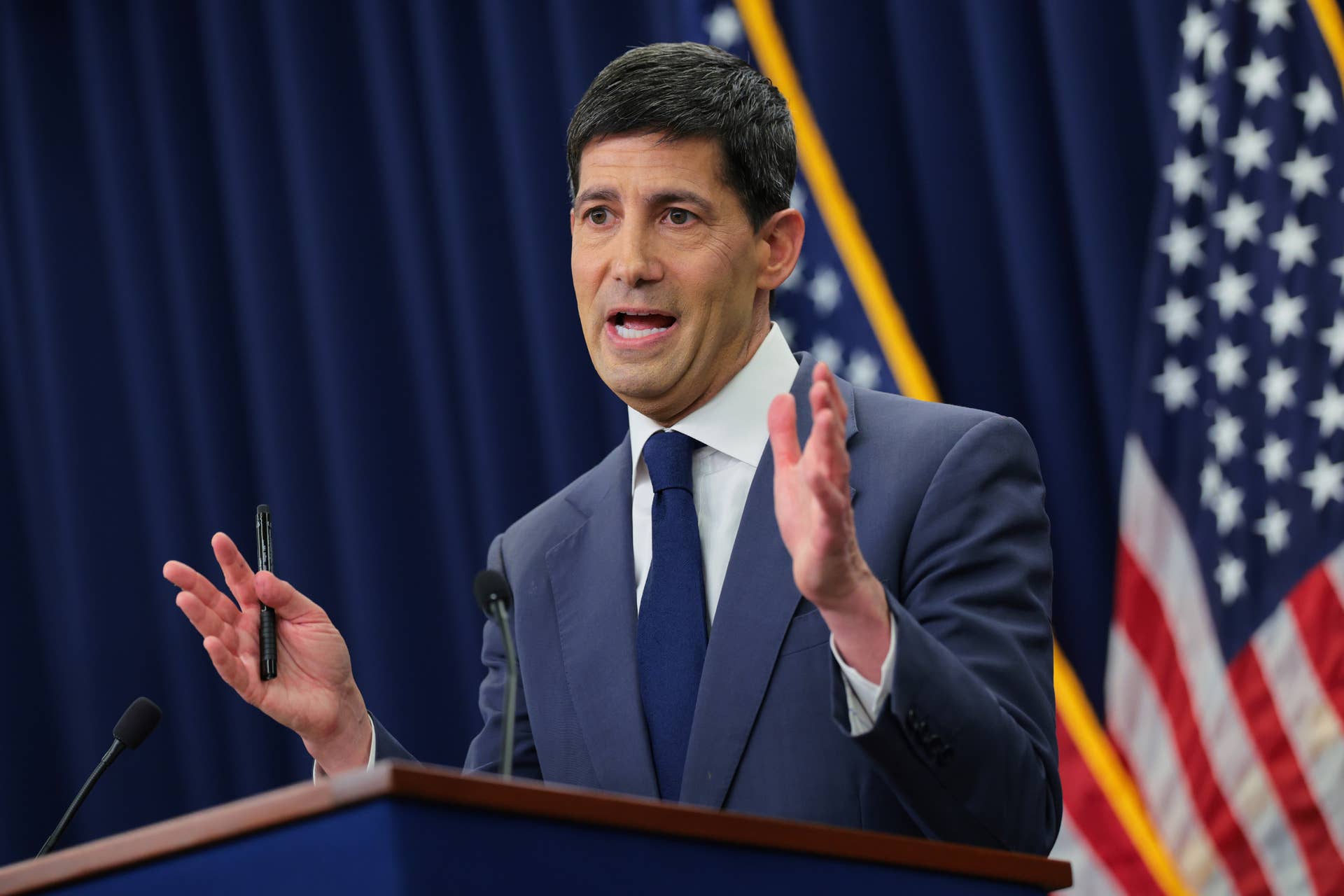
EY-Parthenon Chief Economist Greg Daco believes the Fed is likely to keep rates on hold, as the inflation problem has changed.
More Fed:
- Warsh's first Fed meeting resets interest rate-cut bets
- Hot May CPI sticks a pin in Fed rate-cut bets
- Goldman Sachs sends strong message on next Fed rate cut
In a recent CNBC interview, Daco said monetary policy is already “slightly restrictive", which means it’s already putting some restraint on the economy. He argued, though, that the current inflationary pressures facing the Fed are not primarily driven by overheated demand.
Instead, Daco talked about supply pressures.
He cited higher energy prices and the strain AI places on limited resources, which are pushing up prices for computers and electronics. Those aren't the sort of pressures the Fed can easily fix with higher interest rates.
Consequently, he feels raising interest rates by 25 or 50 basis points wouldn’t get the Fed very far.
“So I still anticipate that the Fed will hold tight for the time being, even though inflation is twice as high as its main target of 2%,” Daco said.
The reason is that the economy is still fragile beneath the surface.
Daco said Americans remain in an “income squeeze", with after-tax, inflation-adjusted income essentially not growing in May.
Hence, a tighter policy could hurt growth without solving the inflation pressures driving prices higher.
Energy prices are squeezing the American consumer
The Iran war effectively turned energy into a consumer problem, and the damage is still filtering through gas, shipping, travel, and inflation.
- According to the IEA’s March 12 oil report, benchmark crude prices surged by $20 a barrel to $92 after hostilities began on Feb. 28, with the agency citing bigger increases across product markets.
According to Axios, citing AAA data on May 20, the national average price of gasoline had climbed to $4.56 a gallon, up 53% since the war started. - According to Reuters, Brent later fell to $73.74 on June 24 as tankers restarted movement through Hormuz, but that retreat does not erase the earlier shock to consumers.
- According to the BEA’s June 25 PCE report, May inflation rose 4.1% year over year, while core PCE climbed 3.4%.
- According to Moody’s Analytics economist Mark Zandi, cited by Business Insider, the Iran war has cost the typical U.S. household about $1,000 so far.
Why is this inflation problem harder to fix
Daco’s argument is that the Fed is up against the wrong kind of inflation with a blunt tool.
Higher rates work best when inflation is being driven by excess demand. If households are borrowing heavily, businesses are hiring aggressively, and consumers are bidding up prices, tighter policy can continue to cool spending.
However, Daco’s point is that this is not the economy the Fed is facing now.
He argued that real after-tax income was essentially flat in May, a view backed by an Equitable Growth report, leaving many Americans facing a "gradual erosion in spending power".
Details
“If you look at the data for the month of May, you see that income is essentially not growing once you adjust for taxes and inflation, which means that there is a gradual erosion in spending power for many Americans across the country. And that's limiting; that's capping consumer spending growth."
Daco’s argument for today’s pressure being supply-driven is a Fed problem that’s a lot tougher to solve. Bumping rates can slow a buyer down, but they cannot produce more oil, add power capacity, or create extra semiconductors overnight.
For a useful analogy, think of it like pressing the brake pedal when the real problem is a blocked road. The car slows, but the blockade persists.
What Wall Street now expects from the Fed
The consensus among experts is still for a long hold, with now a louder minority warning that hikes are back on the table.
According to a Reuters poll published June 26, more than three-quarters of economists expect the Fed to keep rates unchanged at 3.50% to 3.75% through the rest of 2026.
Nevertheless, the hawkish tail has grown.
In a recent piece I did, I talked about how Bank of America now expects three 25-basis-point hikes in September, October, and December. Similarly, according to Reuters, Deutsche Bank expects two hikes, in September and December. Moreover, BNP Paribas and Macquarie are among the minority expecting hikes this year.
Goldman Sachs is less aggressive. According to Goldman Sachs Research on June 9, David Mericle doesn’t expect cuts until June and December 2027 while calling hikes unlikely but more plausible than before.
J.P. Morgan is also in the higher-for-longer camp, with its published Global Research report indicating that the bank expects the Fed to remain on hold through the rest of 2026, followed by a 25-basis-point hike in September 2027.
The IMF added a different warning.
According to Reuters on June 26, IMF Chief Economist Pierre-Olivier Gourinchas said the Fed’s move away from strict forward guidance is “entirely appropriate" because rigid guidance can become dangerous when inflation shifts.
Mark Zandi’s view fits the same tension. On June 3, he said the policy is likely to remain on hold while debate over hikes builds.
What Daco’s rate call means for markets
For markets, Daco’s argument points to a messy setup.
Before getting into the market impact, it’s important to note that Fed Chair Kevin Warsh’s next FOMC rate decision is due July 29, 2026. Additionally, Investing.com’s Fed Rate Monitor, based on CME Group 30-Day Fed Fund futures, showed 69% odds of no change and 31% odds of a 25-basis-point hike
If we see a higher-for-longer setup with the Fed, Treasury yields will remain elevated as investors price in sticky prices but limited relief from cuts.
That pressure will start to build in the broader stock market, especially in rate-sensitive growth stocks that depend on lower discount rates. Similarly, consumer discretionary names, airlines, and retailers face a different squeeze.
Naturally, higher fuel, shipping, and household costs can hurt margins and weaken demand. Energy stocks may benefit from higher oil prices, but that strength can become a tax on the rest of the economy.
So essentially, the Fed might avoid another hike, but investors may not get the easier financial conditions they wanted.
Related: Cathie Wood buys $11.5 million of battered tech stock
Source
Originally published at www.thestreet.com.