Mark Cuban warns AI could make US healthcare even worse
Marc Andreessen posted on X on July 12 that AI is already a better doctor than 99.99% of human doctors. He was reposting OpenAI CEO Sam Altman, who had highlighted a finding that physicians spotted fewer flaws in GPT-5.6's answers than in answers written by actual doctors. Mark Cuban saw it and ...
Overview
Marc Andreessen posted on X on July 12 that AI is already a better doctor than 99.99% of human doctors. He was reposting OpenAI CEO Sam Altman, who had highlighted a finding that physicians spotted fewer flaws in GPT-5.6's answers than in answers written by actual doctors.
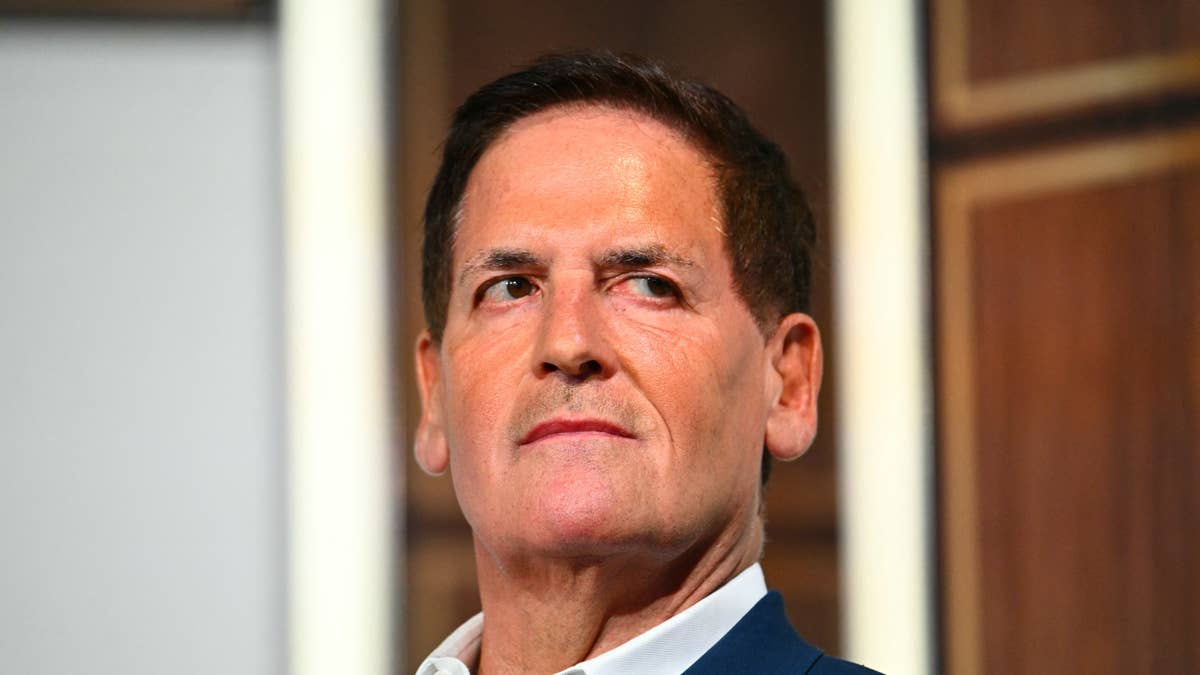
Mark Cuban saw it and replied. His reply wasn't really about whether AI can give good medical advice. It was about what U.S. healthcare does to that advice once it arrives.
What Mark Cuban said about AI and U.S. healthcare on X
"25 pct or more of a doctor's time is spent dealing with conglomerates that do all they can to make the doctor's care more difficult, and expensive, for both the doctor and patient," Cuban wrote on X.
"For every future agent we give AI doctors to deal with this friction, and to improve the quality of care, the conglomerates will have multiple adversarial agents doing all they can to delay and deny, to minimize their cost and maximize their float."
He called it "the agentic version of Mad magazine Spy vs Spy." That's a pretty good description of how it actually works. One side gets a faster tool to fight denials. The other side gets a faster tool to issue them. Neither side is the patient.
More AI:
- The new Chinese AI model rattling U.S. tech investors
- Anthropic restores access to Mythos 5 for select organizations
- SoftBank CEO offers stinging critique of Musk’s AI bet
And he said it's already happening. Insurers are using AI to find ways to manipulate contracts. Hospitals are hiring Revenue Cycle Management firms, which charge as much as 10% of revenue, just to fight back.
"We see this already," he wrote. AI isn't new to this fight. It's been there for a while, and it hasn't been helping patients.
Why Cuban says AI won't fix U.S. healthcare
Here's the part of Cuban's argument that tends to get lost. Nobody's disputing whether AI can read an MRI or catch something a tired doctor missed at 2 a.m. That's not what he's talking about.
He's talking about what happens after the AI gives its answer. Insurers and pharmacy benefit managers make money from the current mess.
The more opaque and complicated the system is, the more they can charge to navigate it. If AI shows up and makes everything cheaper and clearer, that's bad for their business model. So, of course, they're going to use it to protect themselves, not to help patients.
"If you want to see that change, stop working with the healthcare conglomerates. Write agents that define, optimize and contract directly with providers, to eliminate the unnecessary middlemen," he wrote,according to Business Insider.
He also pointed out something most employers probably don't realize. Nobody knows what their employees' healthcare actually costs. Not the employer, not the employee.
The carrier, the ASO, the PBM, everyone touching the economics of care keeps that information hidden from the company writing the check.
"There isn't a single company, including yours, that knows the actual cost of the care they purchase for their employees and families. Not one," he wrote.
Mark Cuban's Cost Plus Drugs model and the Break Up Big Medicine Act
Cuban's been trying to break parts of this open since 2022, when he co-founded Cost Plus Drug Company. It sells generic medications at the manufacturer's cost plus a flat 15% markup. No PBM. No hidden pricing. Just the number, as TheStreet reported.
Details
He's also backed the Break Up Big Medicine Act, introduced in February 2026, which would force large insurers to separate their PBM divisions, provider groups, and drug distribution networks from their core insurance business.
His view is that vertical integration is how these companies hide costs and control outcomes at the same time, and you can't fix one without dealing with the other.
The numbers behind his frustration are pretty stark.
About one in three American adults, around 82 million people, made at least one daily trade-off last year to cover healthcare costs. Rationing prescriptions, taking on debt, and delaying care were all common, according to West Health-Gallup.
Health benefit costs per employee are headed above $18,500 in 2026, the steepest annual jump in fifteen years, according to Mercer.
Anjali/Getty Images
Why Cuban is skeptical that AI will lower U.S. healthcare costs
Cuban isn't just talking about this. He's also backing Claimable, a startup that uses AI to help patients fight insurance denials, according to Bloomberg.
So he's simultaneously building tools to fight the denial machine and warning that the denial machine is building tools right back. He's watched this play out long enough to know how it goes.
"Insurance companies are the worst of the worst," he told the How I Doctor podcast. "If they design a high-deductible plan that someone with a take-home pay of $25,000 can't afford, you're stuck with the financial risk."
That's the context for his reply to Andreessen. It wasn't a rejection of AI as medicine. It was a reminder that AI lands in a system designed by people with strong incentives to use it against patients rather than for them.
Better AI tools don't change that calculus. Changing the incentives does.
What Mark Cuban's healthcare AI warning means for patients and employers
If you're an employer paying healthcare bills you don't fully understand, Cuban's point is that AI isn't going to fix that for you. The people who understand those bills better than you do are using AI to keep it that way.
If you're a patient who's had a claim denied, the tools Cuban is backing might eventually help. But for every tool that helps patients fight faster, there's a team on the other side building one to deny faster. That's the arms race he's describing.
His answer isn't to wait for AI to sort it out. It's to eliminate the middlemen who profit from the confusion, or at least force them to publish their contracts so everyone can see what's actually going on. Until that happens, he thinks better AI just means a faster version of the same broken fight.
Related: Mark Cuban has strong words on AI companies and job losses
Source
Originally published at www.thestreet.com.