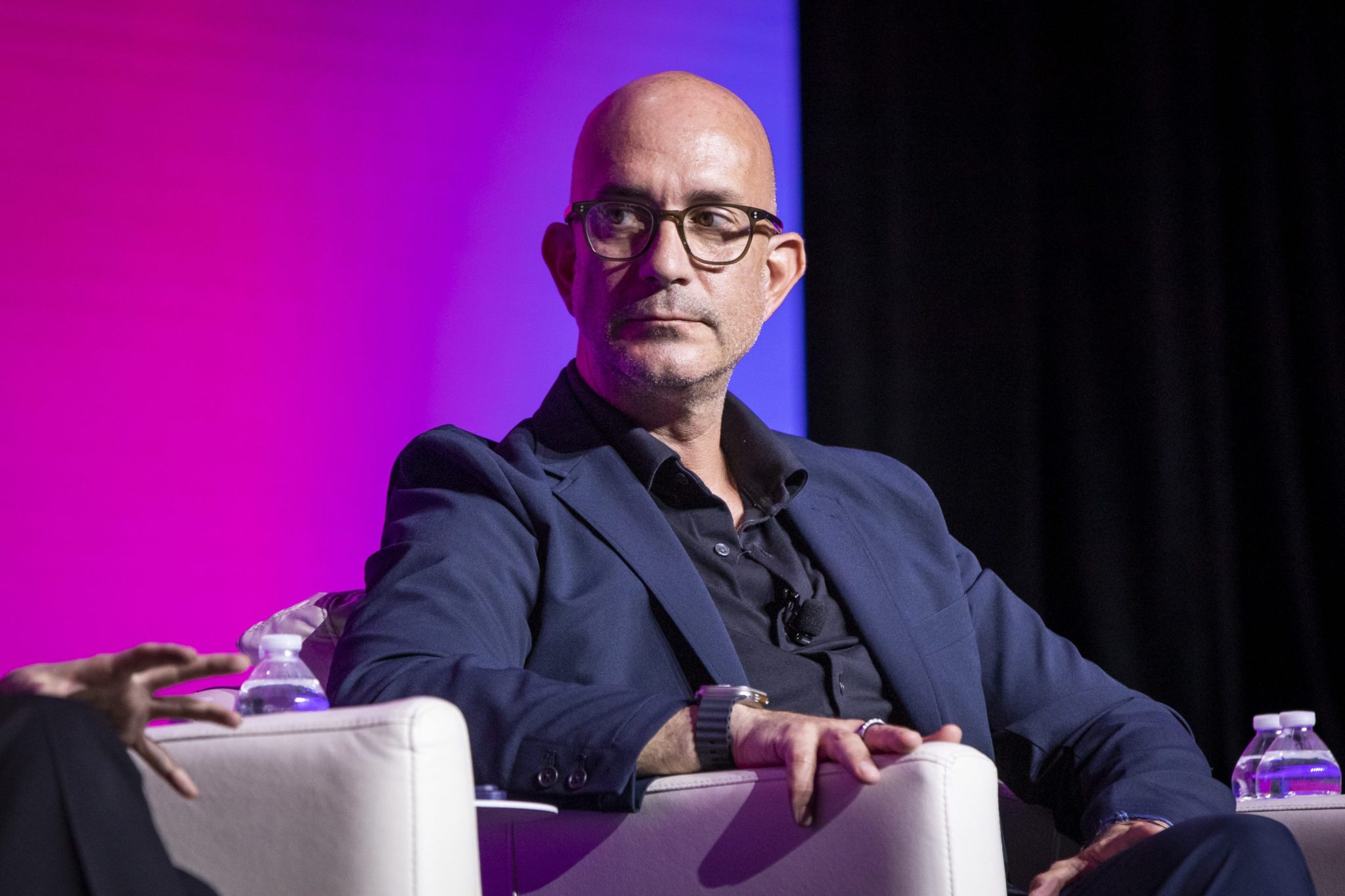
Bessent says a $1,000 seed can build generational wealth
Every personal finance cliché eventually circles back to the same problem. Compound growth rewards people who start early, and almost nobody starts early. The best investing decade of your life is usually the one when you have the least money to invest. Most American kids begin adult life with a ...
Overview
Every personal finance cliché eventually circles back to the same problem. Compound growth rewards people who start early, and almost nobody starts early. The best investing decade of your life is usually the one when you have the least money to invest.
Most American kids begin adult life with a student loan balance instead of a brokerage account. About 38% of U.S. adults own no stocks at all, according to the Treasury Department. The families with the least slack in their budgets tend to wait the longest to invest, if they ever start.
Washington has spent decades nudging people toward 401(k) plans, individual retirement accounts (IRAs) and 529 plans. All of those vehicles share the same flaw. They require money you may not have and paperwork you may never file.
So the idea of the government simply handing every newborn a funded investment account was always going to turn heads. That idea becomes real on Saturday, July 4. Trump Accounts, the tax-advantaged children's investment accounts created by the One Big Beautiful Bill Act, officially open for contributions, and eligible babies begin receiving a $1,000 deposit from the U.S. Treasury.
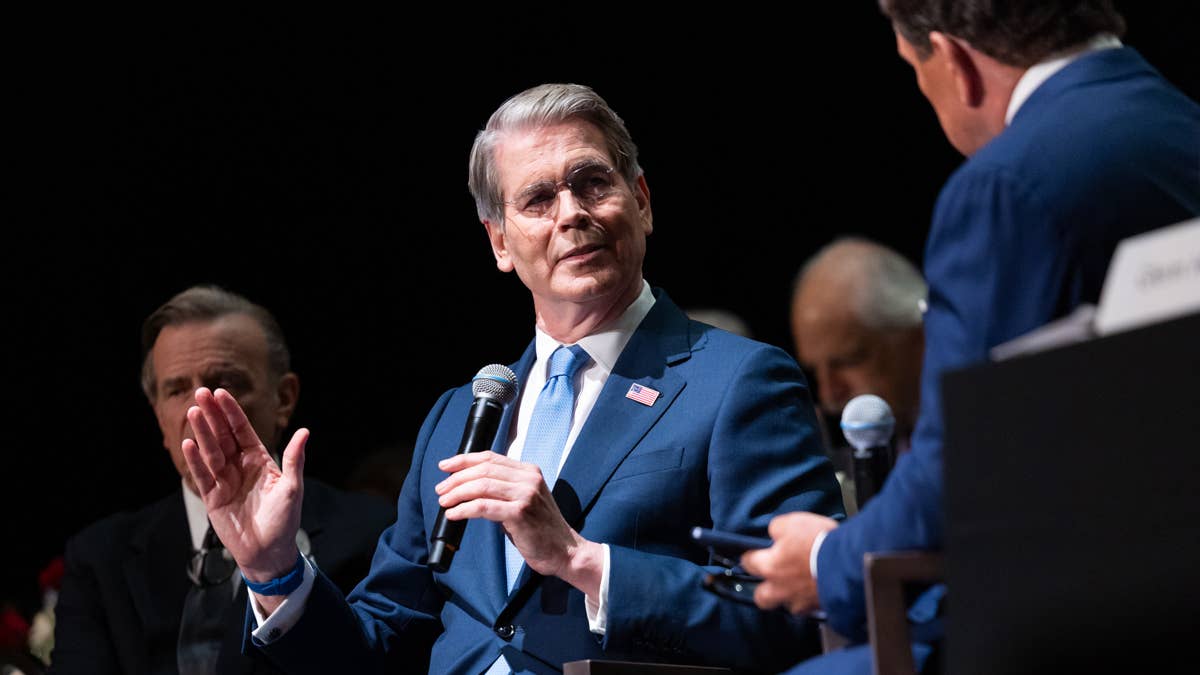
Treasury Secretary Scott Bessent is not framing this as a modest savings perk. He is calling it generational wealth, and he has projections to back the pitch. Whether those projections survive contact with real markets is the question every parent should ask this week.
How Trump Accounts and the $1,000 seed actually work
Trump Accounts, formally known as 530A accounts, are tax-advantaged investment accounts for children. Any U.S. child under 18 with a valid Social Security number can have one, but only babies born between Jan. 1, 2025, and Dec. 31, 2028, qualify for the one-time $1,000 Treasury deposit, according to CNBC.
The money does not sit in cash. Every dollar must go into low-cost funds that track a broad U.S. stock index, with annual fees capped below 0.1%. "Trump Accounts are going to be invested in low-cost index funds," Bessent said, as reported by Yahoo Finance.
More Treasury News:
- Bessent delivers hard-nosed deficit promise, but math is fuzzy
- Secretary Bessent has firm take on Fort Knox gold debate
- Vanguard says the bond playbook just changed
Families, relatives and employers can add up to $5,000 per year combined, with employers allowed to contribute up to $2,500 of that total, according to CNBC. The funds are generally locked until the child turns 18, when the account converts into a traditional IRA, and early withdrawals of earnings can carry a 10% penalty before age 59 1/2 unless an exception applies.
Related: Scott Bessent weighs major change to Trump Account rules
When I dug into the plumbing behind these accounts earlier this year, one Treasury figure stood out. Roughly 25 million families are expected to be eligible.
No brokerage on Earth could buy an onboarding event that size, which is exactly why Robinhood (HOOD) and BNY (BK) fought to build the platform.
Bessent's generational wealth math meets reality
At the Treasury press conference unveiling the program's mechanics, Bessent framed the stakes in sweeping terms. An entire generation of Americans is about to learn "how even small early contributions can become generational wealth," he said in remarks published by the Treasury Department.
The centerpiece of that pitch is a single number. A $1,000 deposit at birth "will grow to over $600,000 by the age of retirement," Bessent said, citing the S&P 500's average annual growth of 10.5% since the 1950s, as reported by Fox Business.
Details
The government's own projections tell the same story, with fine print worth reading:
- A $1,000 seed with no further deposits could reach about $6,000 by age 18 and $243,000 by age 55, according to projections published on TrumpAccounts.gov.
- An account that also receives the maximum $5,000 every year could hit roughly $271,000 by 18 and $13 million by 55, according to those same TrumpAccounts.gov projections.
- Both scenarios assume the S&P 500 keeps delivering its historical average annual return above 10%, according to CNBC.
- Morningstar's market simulations point to an average return closer to 6.3% a year over the next decade, according to data the firm provided to CNBC.
I ran the numbers, and both camps are technically right. At 10.5% a year, $1,000 compounds to roughly $650,000 over 65 years, so Bessent's arithmetic checks out. Swap in Morningstar's 6.3%, and that same seed grows to about $53,000 by age 65.
That is a nice cushion, not a dynasty. The four-point gap between those return assumptions is the entire distance between a thoughtful gift and generational wealth.
The bigger balances require more than patience, too. Reaching nearly $1 million by a child's late 20s would take years of maxed-out contributions plus "fairly strong, uninterrupted market returns," certified financial planner Douglas Boneparth told CNBC.
The free money keeps stacking after July 4
The $1,000 is only the opening bid. Bank of America (BAC) and JPMorgan Chase (JPM) have pledged to match the Treasury deposit for eligible employees' children, part of a wave of corporate matches Wall Street is rolling out, as highlighted in my TheStreet report in January.
Philanthropists are piling in even faster. Michael and Susan Dell committed $6.25 billion to add $250 apiece for children born between 2016 and 2024 who live in ZIP codes where the median income is $150,000 or less, according to CNBC. Ray Dalio pledged $250 each for about 300,000 Connecticut children, and Altimeter Capital CEO Brad Gerstner promised $250 for every Indiana child under five with an account, according to Yahoo Finance.
The Treasury is openly recruiting more donors through what it calls the 50 State Challenge. More than 6 million children have already been signed up, about 1.5 million of them eligible for the $1,000 seed, and 86% of the accounts belong to families earning less than $200,000 a year, according to Treasury figures reported by Yahoo Finance.
The contribution rules still favor families with spare cash, a divide TheStreet has examined in detail. A maxed-out account and a seed-only account start identical on July 4 and end up roughly $265,000 apart by age 18.
One warning before the launch. Official account messages come only from the Treasury's no-reply email address, and parents should type TrumpAccounts.gov directly into a browser rather than clicking links in texts, according to the Treasury Department.
My analysis lands in an unglamorous middle. The $1,000 is real money, the $600,000 is a projection, and the difference between them will be settled by six decades of markets nobody can predict.
What parents control is the part the speeches skip. Even $50 a month added on top of the seed beats the government's base case in every scenario I modeled. July 4 hands your kid a head start. What happens over the other 17 years of childhood is still your job.
Related: Scott Bessent pitches parents on Trump Accounts launch
Source
Originally published at www.thestreet.com.