Berkshire’s $400B cash pile is now a serious defensive weapon
Berkshire Hathaway’s cash and short-term Treasury bill holdings reached a record $397.4 billion at the end of the first quarter of 2026, the highest liquid reserve in its history, according to Berkshire's first-quarter 10-Q filing. The capital is producing significant income, with annualized ...
Overview
Berkshire Hathaway’s cash and short-term Treasury bill holdings reached a record $397.4 billion at the end of the first quarter of 2026, the highest liquid reserve in its history, according to Berkshire's first-quarter 10-Q filing.
The capital is producing significant income, with annualized interest earnings approaching $12 billion as government securities continue to deliver yields of around 3.7%.
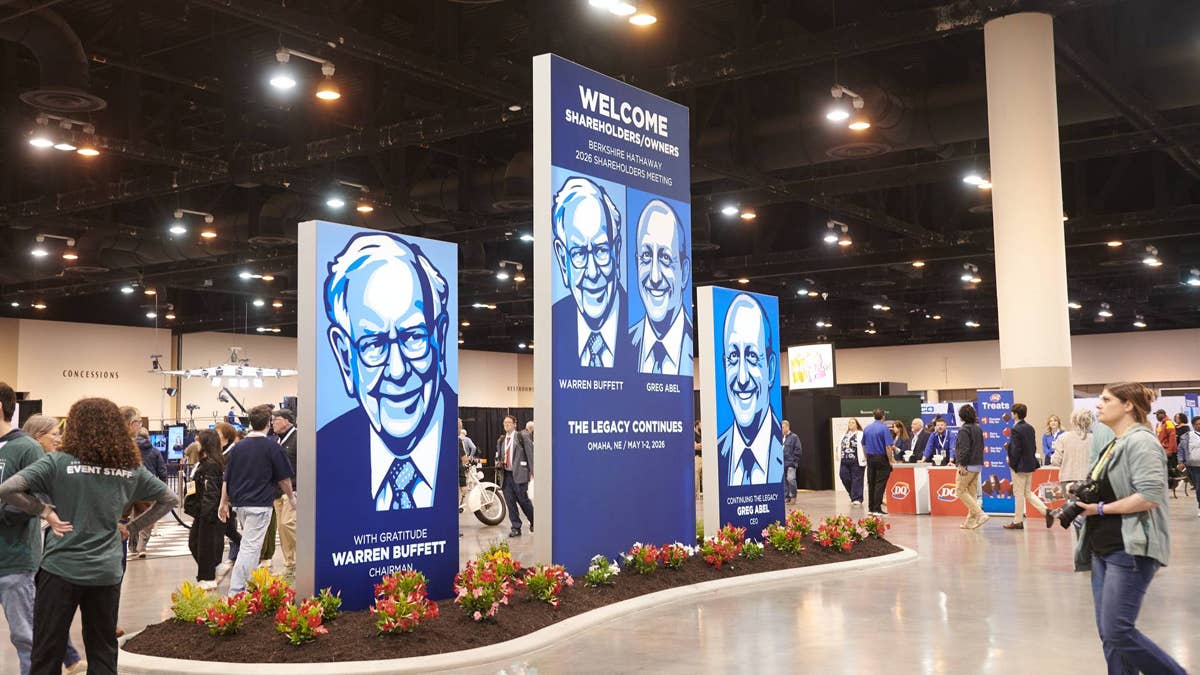
CEO Greg Abel, who assumed the top role on January 1, has extended the cautious selling pattern that Warren Buffett maintained for more than three years.
With the S&P 500 near record highs, UBS analyst Brian Meredith wrote in a note to clients that he expects Berkshire to outperform the broader market amid elevated geopolitical tensions, characterizing the conglomerate as a fundamentally defensive holding, CNBC reported.
Berkshire Hathaway’s Treasury bill hoard turns cash into income
Roughly $339 billion of Berkshire’s liquid reserves sits in short-term Treasury bills, which currently yield around 3.7%, Berkshire's Q1 10-Q filing shows.
Berkshire reported $3.07 billion in discount accretion on those holdings during the first quarter, putting the annualized interest income near $12 billion, the company’s first-quarter 10-Q filing confirmed.
The Federal Reserve has held the federal funds rate steady at 3.5% to 3.75% for four consecutive meetings, most recently at the June 17 FOMC meeting, the first chaired by Kevin Warsh.
Bill Merz, Head of Capital Markets Research for U.S. Bank Asset Management Group, explained in a June 2026 analysis how shifting rate expectations have reshaped the short-term yield landscape that Berkshire's Treasury bill holdings depend on.
Federal Reserve rate cuts pulled short-term bond yields lower last year, but shifting expectations for steady or higher future policy rates pushed short-term yields higher in recent months
Fed funds futures show rates holding near current levels through year-end, with a hike now the greater risk than a cut, according to CME FedWatch.
Treasury bills carry maturities from four to 52 weeks, so Berkshire rolls holdings over at prevailing rates with minimal duration risk, TreasuryDirect data confirms.
That structure means the cash pile works three ways at once: as a downturn safety net, acquisition capital, and a steady income stream.
Greg Abel extends Berkshire Hathaway’s three-year net selling streak
The conglomerate sold $24.1 billion in equities during the first quarter while purchasing roughly $15.9 billion, extending a net-selling streak now in its 14th consecutive quarter, the company’s earnings release indicated.
Abel went further in his debut quarter as chief executive, exiting 16 positions entirely and shrinking the equity portfolio to 29 holdings from 42 at year-end.
More Warren Buffett:
- Buffett's $400 billion war chest stays on the sidelines
- Warren Buffett has a message on energy prices for all Americans
- Warren Buffett's Berkshire sends jarring signal to stock buyers
Despite that aggressive pruning, operating results stayed resilient, with first-quarter operating earnings rising 18% to $11.35 billion.
Insurance underwriting profit jumped 28.5%, and net income more than doubled to approximately $10.1 billion from $4.6 billion in the year-ago period.
Details
Buffett addressed the reasoning during a CNBC interview with Becky Quick, acknowledging that minor drops were not enough to deploy the war chest. "If they’re 5% or 6% cheaper… we aren’t in it to make 5% or 6%," he stated.
UBS calls Berkshire Hathaway a defensive holding amid geopolitical risk
Brian Meredith, an analyst at UBS, characterized Berkshire as a fundamentally defensive holding that outperforms when geopolitical and economic uncertainty rises, CNBC reported.
That assessment aligns with a valuation backdrop that has grown increasingly stretched recently, by multiple measures that long-term investors track closely.
The Buffett Indicator, which compares total U.S. stock market capitalization to gross domestic product, sat at roughly 232% as of early July, with some measures reading closer to 238%, depending on the estimate.
That reading places the ratio roughly two standard deviations above the historical trend, a level that has preceded below-average forward returns, according to Current Market Valuation's analysis.
Buffett reinforced the cautious outlook at Berkshire's annual meeting on May 2, telling shareholders he had never seen investors in 'a more gambling mood,' CNBC reported.
Abel’s early moves signal selective deployment from Berkshire’s cash
Abel has not remained completely passive, making two notable capital commitments during his first six months that reveal his strategic priorities.
Berkshire agreed on May 31 to acquire homebuilder Taylor Morrison Home Corporation for approximately $8.5 billion in total enterprise value, the companies confirmed in a joint press release.
The conglomerate also committed $10 billion to Alphabet's capital raise, which was priced on June 2 at an upsized $84.75 billion, adding to a stake that had tripled to roughly $16.6 billion, Alphabet's SEC filing reported.
Abel restarted share buybacks on March 4 after a 21-month pause, spending $234 million during the quarter, Berkshire’s 10-Q filing showed.
He reinforced that commitment by personally purchasing approximately $15.3 million in Berkshire Class A shares, roughly equal to his full after-tax annual salary.
Abel pledged to repeat that personal investment every year he serves as chief executive, directly tying his financial outcome to shareholders, CNBC reported.
What Berkshire Hathaway’s restraint signals about stock valuations
Berkshire’s decision to hold the largest cash reserve in its history does not predict a market downturn, but it reflects a disciplined valuation framework worth noting.
The company Buffett built over six decades is earning roughly $12 billion a year by holding short-term government securities instead of buying equities at current prices.
Whether that approach proves prescient or excessive will depend on where markets go from here, but the balance sheet offers a clear read on current valuations.
Related: Warren Buffett's Berkshire sends jarring signal to stock buyers
Source
Originally published at www.thestreet.com.