A truck-bed coating company, a UFC birthday party, and an algae bloom: Inside Trump’s $14 million Reflecting Pool fiasco
Trump used an unproven tool on the White House reflecting pool and turned it into a toxic mess — here's what's going on.
Overview
President Trump’s high-profile renovation of the Lincoln Memorial Reflecting Pool has devolved into a public embarrassment, with an “unproven” nanobubbler technology failing to stop an algae bloom while the coating beneath it now appears to be leaching toxic chemicals into the water.
The saga — full of botched timelines, unverified vandalism claims and now toxicity concerns — has become an unlikely metaphor for the administration’s broader instinct to paper over problems rather than fix them. A reflecting pool in more ways than one.
Rushed a $14 million makeover
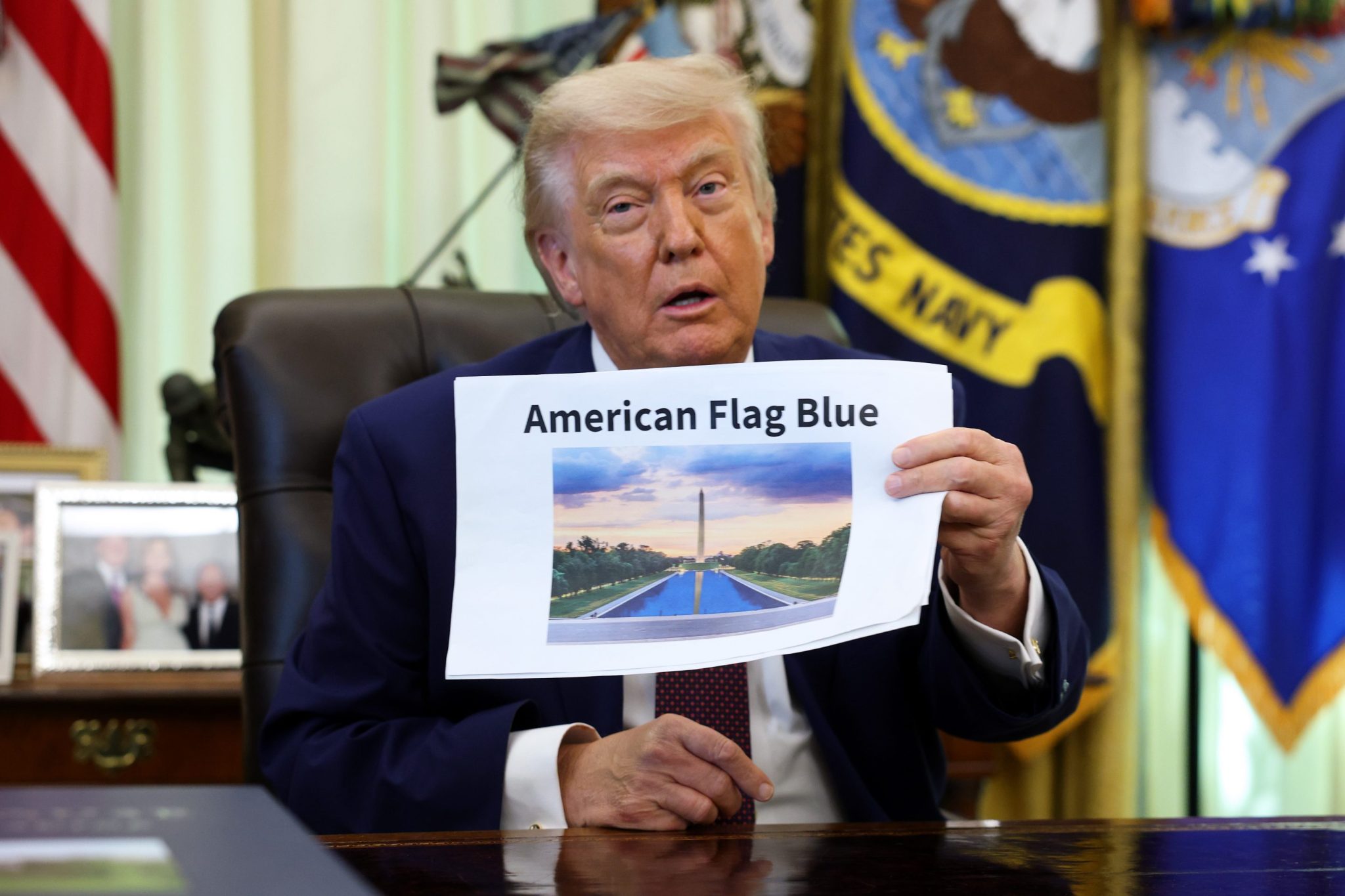
Trump ordered the historic pool between the Lincoln Memorial and Washington Monument repainted “American flag blue” ahead of the country’s 250th anniversary, at a cost that ballooned from $13.1 million to over $14 million. Contractors used products from Rhino Linings, a truck-bed coating company, including a barrel of “RHINO 405 A Thixotropic High Viscosity Epoxy Resin,” which OSHA data sheets flag as toxic to aquatic life with long-lasting effects and as a strong irritant. According to The New York Times, crews under a rushed deadline tied to a UFC birthday event for Trump at the White House (he’s a Gemini) removed the pool’s “nanobubblers” — devices meant to keep the water oxygenated — before the project was finished.
The algae strikes back
Within days of the pool being refilled on June 9, patches of vivid green algae bloomed across the surface, particularly near the Lincoln and World War II memorials. Interior Department spokesperson Katie Martin initially dismissed it as “residual” algae from supply lines that had been dormant during construction, insisting the president had “permanently resolved” issues that had stumped the Obama and Biden administrations. When that explanation wore thin, officials pivoted to touting “high-tech nanobubble ozone technology” alongside hydrogen peroxide dumps as the fix, at one point declaring the water “crystal clear” even as visitors reported a murky, fluorescent-green pool.
An unproven fix and escalating claims
Details
The nanobubbler system — essentially imperceptibly small bubbles meant to oxygenate the water and choke off algae growth — had never been tested at this scale on a public monument before deployment. As the algae persisted and rips appeared in the new “American Flag Blue” sealant, Trump shifted blame to unnamed vandals, claiming on Truth Social that someone had sliced a “250-foot-long gash” into the lining and poured chemicals into the pool. Park Police made five arrests and issued additional citations, but investigators never substantiated claims that vandalism — rather than a failed renovation — caused the damage.
Experts say the real danger isn’t algae
Ironically, the algae itself has been deemed harmless. Rosalina Stancheva Christova, an aquatic ecology professor at George Mason University, identified the bloom as a Desmodesmus species that is “absolutely harmless” to humans and animals. The real toxicity concern, per The New Republic‘s review of contractor materials, confirming previous reporting from Meidas News, lies in the epoxy resin used for the pool’s new lining, which carries explicit long-term aquatic toxicity warnings. The Trump administration even compared its algae battle to the Iran conflict in a press statement, underscoring the political theater surrounding what is, at its core, a maintenance failure.
Ahead of the July 4 celebrations, National Guard members and U.S. Park Police have been patrolling the site around the clock as the administration races to fix the pool before the 250th anniversary festivities. What began as a symbolic gesture — a gleaming blue pool reflecting the nation’s founding — has instead become a literal reflection of dysfunction: unproven technology, rushed contracting, and shifting stories about what’s happening, while officials have yet to acknowledge the literal toxicity that they seem to have introduced themselves.
For this story, Fortune journalists used generative AI as a research tool. An editor verified the accuracy of the information before publishing.
This story was originally featured on Fortune.com
Source
Originally published at fortune.com.